Pos:
Home KnowledgeTechnologyBoron-Doped Single-Crystal Diamond: The Core Material of the New Generation of Wide Bandgap SemiconductorsDiamond, as an ultra-wide bandgap semiconductor, is recognized as the ultimate power semiconductor and is likely to revolutionize power electronics and radio frequency electronics. As a novel p-type semiconductor material, boron-doped single-crystal diamond boasts the advantages of high stability, a high breakdown electric field, and a large hole mobility. It combines the conductive characteristics of p-type semiconductors with the excellent physical and chemical properties of diamond itself, making it the material of choice for fabricating high-temperature, high-power semiconductor components.
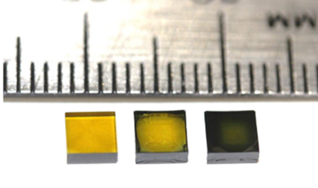
The wide bandgap of diamond endows it with an extremely strong radiation resistance. Compared with traditional silicon detectors, diamond detectors are not only less susceptible to radiation-induced damage but also feature an extremely fast carrier drift velocity. In applications such as deep space probes, nuclear fusion reactor monitoring, and aerospace radiation detection, the ability of boron-doped single-crystal diamond to withstand extreme environments and its high response speed enable devices to operate stably in high-temperature or high-radiation scenarios. Additionally, its short response time makes it suitable for high-energy physics experiments.
The core lies in utilizing the high breakdown electric field of p-type diamond to achieve a switching function with an extremely high voltage withstand capacity. For instance, in application scenarios such as high-power DC conversion, ultra-high voltage power transmission, and aerospace power systems, Schottky diodes or field-effect transistors fabricated from p-type diamond leverage the multiple characteristics of diamond, including an ultra-high voltage withstand capacity, efficient power conversion, and extremely low power consumption, thereby enhancing the operational efficiency and stability of the devices.
Diamond probes are made of boron-doped diamond materials. In scanning probe microscopy (SPM) operations, the tip of the probe interacts with the sample surface at the nanoscale. For scanning tunneling microscopy (STM), current is measured by virtue of the quantum tunneling effect; for conductive atomic force microscopy (C-AFM), local conductivity is measured in contact mode. Boron-doped diamond probes can maintain their performance under harsh scanning conditions (such as high current density and long-term contact) due to their excellent mechanical stability, high wear resistance, and stable electrical properties, which are significantly superior to traditional metal (e.g., platinum, gold) or metal-coated probes.
In the scenarios of high-sensitivity biosensors and medical detection, boron-doped diamond exhibits the advantages of microelectrode characteristics (i.e., diamond microelectrodes, due to their extremely small volume, have a mass transfer layer thickness close to the electrode size, enabling the establishment of a steady-state diffusion layer in microseconds without complex depolarization treatment), high sensitivity, and good adaptability to high-resistance environments (i.e., diamond electrodes still show excellent electrochemical responses in high-resistance ultrapure water). These advantages facilitate in vitro and in vivo detection of neurotransmitters (e.g., dopamine), blood glucose, uric acid, vitamin C, and other substances for medical device manufacturers, biotechnology companies, neuroscience research institutions, and other entities.
CSMH is a national high-tech enterprise specializing in the R&D, production, and sales of wide bandgap semiconductor materials, is committed to providing customers at home and abroad with boron-doped single-crystal diamond materials and application solutions of different sizes and doping concentrations.
 闽ICP备2021005558号-1
Leave A Message