Pos:
Home KnowledgeTechnologyDiamond Heat Sink: The Core Solution for Efficient Thermal Management in New Energy VehiclesAs new energy vehicles (NEVs) evolve toward higher power, longer range, and ultra-fast charging, thermal management systems have become a critical bottleneck limiting performance breakthroughs. Boasting an exceptional thermal conductivity of 2000–2200 W/(m·K), diamond heat sinks are crossing over from high-end industrial applications to emerge as a "thermal management revolutionizer" for core NEV systems, with applications spanning key components such as batteries, electronic controls, and fast-charging systems.
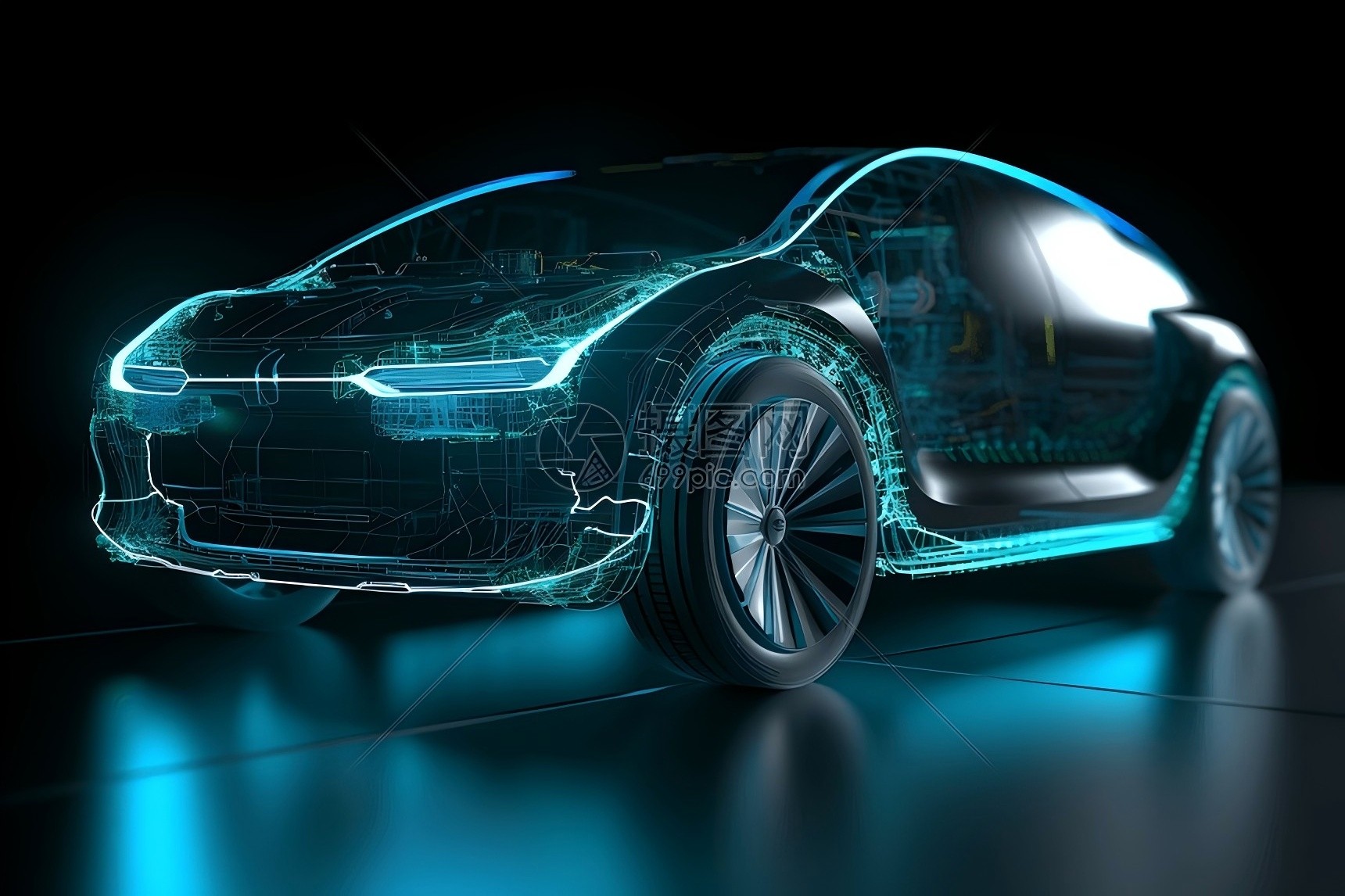
The risk of thermal runaway in power batteries, coupled with the demand for higher energy density, has created an urgent need for high-efficiency heat-dissipation materials. Diamond heat sinks empower battery systems through two innovative approaches: first, three-dimensional thermal conductive networks formed by nanodiamond doping, which can increase the thermal conductivity of battery modules to 8 W/(m·K). When used in conjunction with phase change materials, the temperature response speed is accelerated by 40%, effectively suppressing localized hotspots during charging and discharging. Diamond-metal composite heat dissipation technology, optimized via interface bonding processes, achieves a composite thermal conductivity exceeding 763 W/(m·K), enabling precise temperature control for power battery packs.
Second, diamond heat sinks enable breakthrough applications in next-generation solid-state batteries. Electrolytes doped with diamond nanowires can boost ionic conductivity by 100 times, achieving a technical breakthrough of 12-minute ultra-fast charging while enhancing battery structural stability. Nanodiamond coating technology reduces the expansion rate of silicon anodes from 300% to 8%, helping battery energy density exceed 450 Wh/kg and providing critical material support for long-range vehicles. Additionally, diamond-based thermoelectric modules can recover waste heat during vehicle operation, increasing driving range by an additional 5% and further optimizing energy efficiency.
As the power density of NEV motor and electronic control systems continues to rise, the heat flux density of IGBT/SiC power modules has exceeded 500 W/cm², making traditional cooling solutions inadequate. With ultra-high thermal conductivity and a low coefficient of thermal expansion (1×10⁻⁶/℃), diamond heat sinks have become the ideal solution for this field. In motor systems, the microchannel design of diamond-copper composite materials embedded in rotor shafts reduces winding temperature rise by 25%, adapting to high-temperature operating conditions without complex cooling structures.
In electronic control systems, diamond heat dissipation substrates not only rapidly conduct heat away from chips but also match the thermal expansion coefficients of third-generation semiconductor materials such as SiC and GaN, effectively reducing thermal stress damage and significantly improving system stability. Silicon-diamond hybrid bonding technology establishes efficient heat dissipation channels for high-power chips, reducing the junction temperature of SiC MOSFET inverters by 20°C, doubling the service life of the entire machine, and reducing volume by 6 times. This dual advantage of "heat dissipation + protection" makes it a core component for 800V high-voltage platform electronic control systems.
With the popularization of ultra-fast charging technologies above 5C, components such as charging guns and high-voltage relays face dual challenges of insulation and heat dissipation. Charging gun contact insulation layers made of CVD diamond films have a breakdown voltage of 20 kV/mm. When combined with diamond-filled resin, the dielectric strength of fast-charging guns is increased to 50 kV/mm, and the tracking resistance life is extended by 10 times. In 800V–1000V high-voltage platforms, diamond-silver composite contacts for on-board high-voltage relays achieve a service life of up to 2 million cycles—four times that of traditional materials—perfectly adapting to high-frequency start-stop requirements.
The wide-bandgap semiconductor properties of diamond also enable upgrades in power electronic devices. Devices such as diamond diodes and field-effect transistors can reduce inverter energy loss by more than 50%. Combined with high-frequency switching characteristics, they enable miniaturization and lightweighting of DC-DC converters and on-board chargers. In practical applications, fast-charging systems equipped with diamond heat sink technology can uniformly conduct the instantaneous high heat generated by power battery fast charging to liquid cooling plates within 20 seconds, avoiding safety risks caused by localized overheating while boosting charging speed by 5 times.
In the field of hydrogen fuel cell vehicles, diamond heat sinks demonstrate unique advantages. Boron-doped diamond-coated fuel cell bipolar plates have a service life of over 10,000 hours in a strong acid environment (pH=1) and a contact resistance below 5 mΩ·cm², solving the problem of insufficient corrosion resistance of traditional plates. Meanwhile, diamond quantum sensors based on NV color centers enable ppm-level hydrogen leakage detection and stress monitoring with 0.1 MPa precision, providing core guarantees for hydrogen energy storage safety.
In intelligent driving perception systems, diamond infrared lenses—with a transmittance of over 70% (5–10 μm band) and resistance to sand and dust erosion—significantly improve the reliability of LiDAR in extreme environments. Diamond Hall elements, with a detection accuracy of ±0.1%, enable precise monitoring of battery current, providing reliable data support for autonomous driving decision-making. These cross-cutting applications are driving diamond heat sinks to evolve from a single heat dissipation function toward "multi-functional integration."
With exceptional thermal conductivity, excellent mechanical properties, and chemical stability, diamond heat sinks have become a key material for breaking through technical bottlenecks in NEVs. From the safety protection of power batteries to the efficiency improvement of ultra-fast charging, from the stability optimization of electronic control systems to the safety assurance of hydrogen energy, their application scenarios are continuously expanding and deepening. As CVD processes mature and costs decline, diamond heat sinks will achieve large-scale application in next-generation intelligent electric vehicles, providing core support for high-power, long-range, and ultra-safe mobility experiences.
As a leading manufacturer in the diamond semiconductor industry,CSMH uses the MPCVD method to prepare large-sized and high-quality diamonds,and currently has mature products such as diamond heat sinks, diamond wafers, diamond windows,diamond composite materials,etc.Among them,the thermal conductivity of diamond heat sinks is 1000-2200w/(m.k), which has been applied in aerospace, high-power semiconductor lasers, optical communication, chip heat dissipation, nuclear fusion and other fields
 闽ICP备2021005558号-1
Leave A Message