Pos:
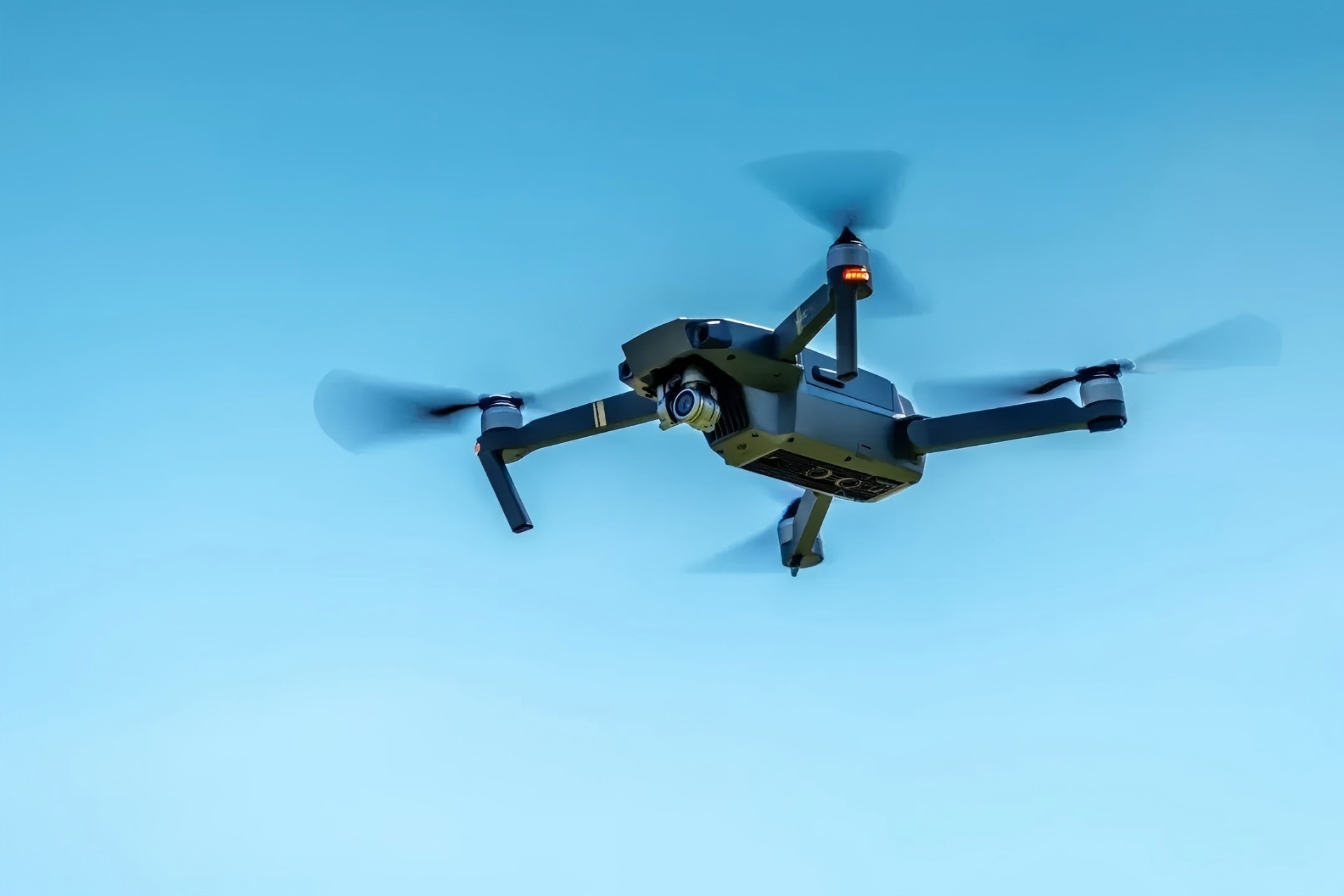
Home KnowledgeTechnologyDiamond Heat Sink: Equipping UAVs with Thermal "Superconducting Plates"When a UAV hovers under the scorching sun for power inspection tasks, the temperature of its core motor control chip quietly approaches the critical threshold; when a military UAV switches to full-speed tracking mode, the instantaneous heat released by internal power devices is sufficient to "overwhelm" conventional thermal management systems. Heat, confined within the highly compact fuselage of a UAV, has become an invisible shackle restricting its performance breakthroughs. However, a material hailed as the "King of Thermal Dissipation"—diamond heat sink—is quietly reshaping the landscape of this "thermal battle", injecting a powerful "cooling" force into the limits of UAV flight.
Modern UAVs, especially high-performance industrial and military models, are highly integrated technological complexes. High-energy-density batteries, high-power motor drives, high-frequency processors, and high-power RF/laser modules are densely packed in limited spaces. With the explosive growth of demands for intelligence, long endurance, and high payload capacity, the power consumption and heat flux density of chips and power devices have surged dramatically, with heat generation per unit area reaching ten times or even a hundred times that of traditional equipment. Traditional copper and aluminum heat dissipation solutions, constrained by their thermal conductivity coefficients (approximately 400 W/mK for copper and 237 W/mK for aluminum), are increasingly stretched thin when dealing with the ultra-high heat flux density generated by third-generation semiconductor devices (e.g., GaN, SiC). They have thus become a core bottleneck hindering the development of UAVs toward higher power, smaller size, and greater reliability.
When diamond is applied in the form of heat sinks (as device substrates or intermediate heat dissipation channels) to the key heat-generating components of UAVs, the effect is revolutionary:
In motor drive and power modules: Serving as the substrate or carrier for GaN/SiC high-power-density devices, diamond heat sinks can rapidly dissipate the massive heat generated by switching losses, ensuring that the motor drive system stably outputs peak power with high efficiency under high-temperature conditions. This directly enhances the UAV’s instantaneous burst capability, load capacity, and adaptability to extreme environments such as high-altitude low temperatures and high-temperature deserts.
In core processors and high-power-consumption chips: Acting as the heat dissipation substrate for processing units like CPUs and FPGAs, or as part of integrated microchannel cold plates, diamond effectively controls the temperature of the UAV’s "brain", preventing performance throttling caused by overheating. It ensures the smooth operation of complex flight control algorithms, real-time image recognition, and data transmission, providing computing power support for intelligent applications such as autonomous flight and swarm coordination.
In lidar and electro-optical payloads: High-power lasers are the core of lidar systems and some electro-optical pods, and their heat generation directly impacts output power stability and detection accuracy. The application of diamond heat sinks significantly improves laser heat dissipation efficiency, ensuring consistent sensor performance during long-duration missions.
In RF power amplifiers: For UAVs used in communication, reconnaissance, and electronic warfare, the RF front-end power amplifiers generate substantial heat. Thanks to diamond’s high thermal conductivity and high-frequency characteristics, it can markedly improve amplifier heat dissipation and signal transmission efficiency, enhancing communication range and anti-interference capability.
CSMH uses the MPCVD method to prepare large-sized and high-quality diamonds,and currently has mature products such as diamond heat sinks, diamond wafers, diamond windows,diamond composite materials,etc.Among them,the thermal conductivity of diamond heat sinks is 1000-2200w/(m.k), which has been applied in aerospace, high-power semiconductor lasers, optical communication, chip heat dissipation, nuclear fusion and other fields.
 闽ICP备2021005558号-1
Leave A Message