Pos:
Home KnowledgeTechnologyDiamond Heat Sink: Infusing the Soul of High-Efficiency Thermal Dissipation into RobotsIn today’s era of rapidly advancing robotics technology, a core challenge has become increasingly prominent: how to dissipate the enormous heat generated by high power density, miniaturization, and high-frequency operation within limited physical space. As traditional thermal management approaches gradually reach their physical limits, a revolutionary material—diamond heat sink—is quietly stepping into the spotlight of the robotics field, emerging as the key "key" to unlocking next-generation high-performance robots.

Modern robots, especially collaborative robots, surgical robots, autonomous mobile robots (AMRs), and humanoid robots, are evolving at an unprecedented pace in terms of their "brains" (CPUs/GPUs/dedicated AI chips) and "muscles" (joint drive motors, servo drivers, and power semiconductors such as IGBTs and SiC MOSFETs). Higher computing power demands, more compact structural designs, and stronger driving capabilities all directly translate into more concentrated heat flux density. For instance, the heat flux density of core processors in advanced humanoid robots can already match that of high-performance computing chips, while the junction temperature of motor drivers for joint actuation can rise rapidly under frequent start-stop cycles and heavy-load conditions. Failure to dissipate heat timely and efficiently will trigger a series of cascading issues.
Traditional metal heat sinks (e.g., aluminum, copper) and air/liquid cooling systems are struggling to cope with these emerging, localized extreme high heat flux scenarios, where the thermal conductivity of materials has become the new bottleneck. Against this backdrop, diamond—the material with the highest known thermal conductivity in nature (theoretical thermal conductivity up to 2000–2200 W/m·K, 5 times that of copper)—offers a disruptive solution in the form of heat sinks.
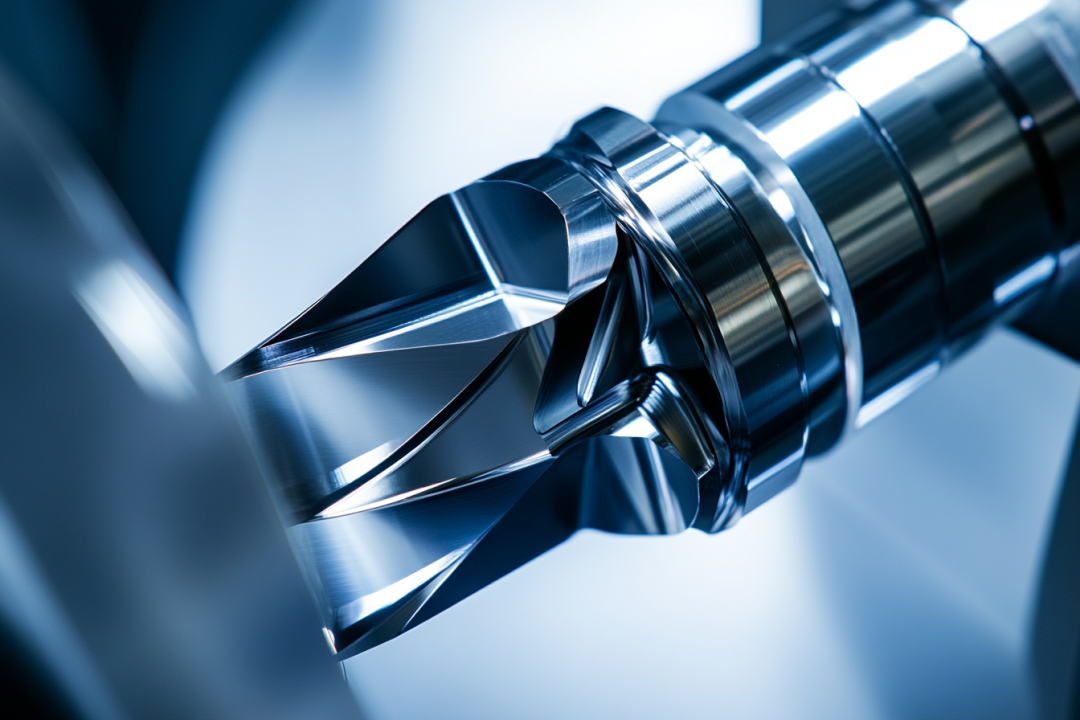
Within robotic systems, diamond heat sinks are comprehensively raising the performance ceiling from core components to joints:
Master Control & AI Computing Modules: Empowering the "Most Powerful Brain"The robot’s main control unit and AI computing module serve as its "most powerful brain" and are major heat sources. Integrating diamond heat sinks into the packaging of high-end CPUs, GPUs, or dedicated AI accelerator chips (e.g., NPUs for real-time visual processing)—acting as the critical thermal interface between the chip and external heat spreaders—can immediately reduce the chip junction temperature. This enables the chip to operate stably at higher frequencies, unleashing its full computing potential, and ensures the smooth execution of complex environmental perception, real-time path planning, and deep learning inference. It serves as the foundational support for realizing intelligent leaps in high-level autonomous mobile robots (AMRs) and humanoid robots.
Motor Drive Systems: Boosting Agile & Enduring Motion PerformanceRobotic joint movement and power output rely on motor drive systems. Third-generation semiconductor power devices represented by silicon carbide (SiC) and gallium nitride (GaN) have become the preferred choice for advanced servo drivers and power modules due to their high-frequency and high-efficiency characteristics. However, their higher operating frequencies and power densities pose more severe thermal challenges. Directly bonding or depositing diamond heat sinks onto the substrates of SiC/GaN power devices establishes an optimal thermal pathway from the chip’s active region to the heat dissipation substrate. This not only effectively reduces the device junction temperature by tens of degrees Celsius, significantly enhancing system efficiency and power density, but also allows for more compact driver designs that can be directly embedded inside robotic joints, achieving true modular and integrated actuation. This delivers more agile, powerful, and enduring motion performance for robots.
Sensory & Communication Modules: Ensuring Precision & ReliabilityBeyond master control and drive systems, high-power lidar transmission modules and high-performance RF communication modules inside robots also generate concentrated heat. The application of diamond heat sinks ensures these critical "sensory organs" and "nerves" operate stably across a wide temperature range, guaranteeing the precision and reliability of robotic perception and interaction.
Looking ahead, as robots evolve toward higher intelligence, stronger physical capabilities, and more dexterous operations, the demand for efficient, compact, and reliable thermal management will only grow more urgent. With its unparalleled thermal conductivity, diamond heat sinks are gradually transitioning from a "premium option" to a key enabling technology for breaking through the performance boundaries of next-generation robots. It is not merely an engineering material for solving thermal dissipation problems, but the "soul of thermal management" that infuses lasting, stable, and high-efficiency vitality into the "steel body" of robots. In the near future, robots equipped with a "diamond core" are poised to demonstrate unparalleled performance and reliability in scenarios such as extreme environment exploration, precision surgery, and high-flexibility smart manufacturing, truly reshaping the future landscape of productivity.
CSMH uses the MPCVD method to prepare large-sized and high-quality diamonds,and currently has mature products such as diamond heat sinks, diamond wafers, diamond windows,diamond composite materials,etc.Among them,the thermal conductivity of diamond heat sinks is 1000-2200w/(m.k), which has been applied in aerospace, high-power semiconductor lasers, optical communication, chip heat dissipation, nuclear fusion and other fields.
 闽ICP备2021005558号-1
Leave A Message