Pos:
Home KnowledgeTechnologyBeyond Thermal Limits: Diamond Heat Sinks Reshape the Future Ecosystem of Data CentersAs artificial intelligence models evolve at an exponential pace and computing power demands surge like a tidal wave, the thermal management systems of modern data centers are facing unprecedented bottlenecks. Traditional air-cooling and conventional liquid-cooling solutions are struggling to cope with chips where local heat flux density exceeds 100W/cm². Heat accumulation-induced performance throttling, reduced reliability and even hardware damage have become invisible constraints hindering the development of the computing power industry. Against this backdrop, diamond heat sinks, hailed as the "ultimate thermal management material", are quietly transitioning from laboratories to the frontline of data centers, injecting a breath of "cooling relief" into the "heart" of the digital world with their disruptive thermal management capabilities.
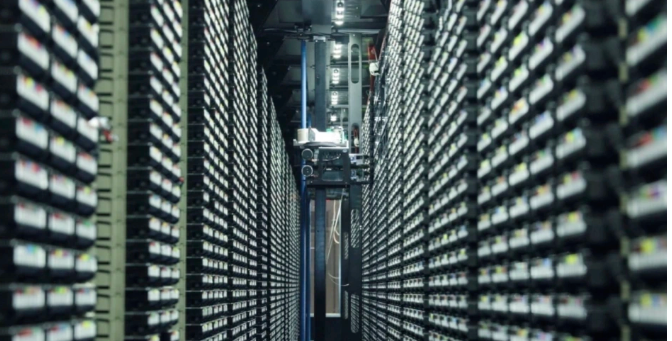
The thermal dissipation challenge in data centers is essentially a physical problem of energy conversion and management. As chip manufacturing processes approach physical limits, the heat generated per unit area (heat flux density) is rising sharply. Take current high-end CPUs and GPUs as examples—their heat flux density has far exceeded the carrying capacity of traditional thermal materials such as copper (with a thermal conductivity of approximately 400 W/mK) and aluminum (around 237 W/mK). If heat cannot be dissipated in a timely manner, it will directly lead to unstable transistor performance and increased leakage current, forcing chips to self-protect through "frequency reduction" and resulting in the waste of valuable computing resources. More critically, long-term operation at high temperatures will significantly shorten equipment lifespan, increasing failure risks and operational costs.
Therefore, the innovation of thermal dissipation materials has become the key to breaking the deadlock. An ideal heat sink material must simultaneously possess ultra-high thermal conductivity, a coefficient of thermal expansion matching that of chip materials, excellent insulation properties and machinability. Diamond—especially high-purity single-crystal or polycrystalline diamond produced via Chemical Vapor Deposition (CVD) technology—boasts a thermal conductivity of 1200–2000 W/mK, 3–5 times that of copper. It also exhibits outstanding insulation performance and high hardness, theoretically perfectly meeting the stringent thermal requirements of next-generation chips. This is by no means a simple material replacement; it is an underlying revolution that impacts the energy efficiency, density and reliability of data centers.
The value of diamond heat sinks is permeating and amplifying across every link of the data center hardware ecosystem.
In core computing units, particularly AI training chips and high-performance CPUs/GPUs, diamond heat sinks can be directly integrated into chip packages. For instance, when used as the "backplane" or "interlayer" of a chip, they can rapidly and laterally dissipate heat generated by transistors along the shortest path with minimal resistance before transferring it to secondary heat sinks. This allows chips to operate stably at higher power levels, achieving sustained full-performance output. Studies have shown that a certain type of high-performance chip adopting a diamond substrate can increase its maximum operating frequency by over 15% under the same cooling conditions, or reduce the energy consumption of the thermal management system by 30% while maintaining equivalent performance.

In the field of optical modules and high-speed interconnection, as data transmission rates advance toward 800G and 1.6T, thermal management of laser chips has become a bottleneck. Diamond’s ultra-high thermal conductivity can quickly dissipate heat from the active region of lasers, stabilizing their wavelength and output power, significantly lowering bit error rates, and enhancing the reliability and transmission distance of optical links. In power electronics and power supply modules, the efficiency and power density of silicon-based or wide-bandgap semiconductor power devices (such as SiC and GaN) inside uninterruptible power supplies (UPS) and server power supplies of data centers are also limited by thermal dissipation. The application of diamond heat sinks enables these devices to operate at higher temperatures or withstand larger currents, thereby reducing the size of power supplies and improving overall energy conversion efficiency.
From a system-level perspective, the adoption of diamond thermal management solutions means that denser, more powerful server racks can be deployed within the same data center space, boosting the power density of data centers. Meanwhile, the substantial improvement in heat dissipation efficiency reduces the load on cooling systems (such as chillers and fans), directly lowering the Power Usage Effectiveness (PUE) of data centers and advancing toward the goal of carbon neutrality.
The application of diamond heat sinks in data centers goes far beyond solving a single technical bottleneck. It represents a systematic approach to reshaping computing infrastructure, starting from the very foundation of materials science. As the torrent of data surges ever stronger and the boundaries of intelligence continue to expand, it is the solid, high-efficiency foundational innovations like diamond that ensure the steady progress of this digital revolution. It cools not only the temperature of chips, but also the long-standing "thermal dilemma" that has plagued the data center industry in balancing energy consumption and performance, paving a solid path toward a more dense, efficient and sustainable digital future. The evolution of thermal management technology has always been the silent partner of the computing revolution—and today, diamond is enabling this partner to unleash unprecedented power.
CSMH uses the MPCVD method to prepare large-sized and high-quality diamonds,and currently has mature products such as diamond heat sinks, diamond wafers, diamond windows,diamond composite materials,etc.Among them,the thermal conductivity of diamond heat sinks is 1000-2200w/(m.k), which has been applied in aerospace, high-power semiconductor lasers, optical communication, chip heat dissipation, nuclear fusion and other fields.
 闽ICP备2021005558号-1
Leave A Message